
Many people assume that communication support for deaf people means sign language or captions.
For many people across the UK, lipreading is their main way of understanding spoken communication.
A lipspeaker is language service professional who supports that process by silently repeating speech using clear lip patterns, natural expression, and controlled pacing.
This is a trained profession. Lipspeakers complete specialist training to develop accuracy, clarity, and control in how speech is presented visually. This includes learning how to adapt to different speakers, accents, and environments while maintaining consistency for the person who is lipreading.
What does a lipspeaker do?
A lipspeaker makes spoken communication easier to follow in real time.
They will:
- Repeat speech clearly and naturally
- Maintain consistent lip patterns that are easy to follow
- Adjust pace and break down fast speech
- Use facial expression to support meaning
- Position themselves so they are clearly visible
They may also support with names, numbers, or technical language, especially in group or fast paced conversations.
This is a trained profession. Lipspeakers complete specialist training to develop accuracy, clarity, and control in how speech is presented visually. This includes learning how to adapt to different speakers, accents, and environments while maintaining consistency for the person who is lipreading.
You can check out our lipspeaker library to see examples of lipspeakers in action.
Where is lipspeaking used?
Lipspeakers are used wherever spoken communication needs to be accessible.
Common settings include:
- Workplace meetings and day to day communication
- Job interviews and training
- University lectures through Disabled Students’ Allowance
- Healthcare appointments
- Conferences, events, and public speaking
They work with people who are deaf or hard of hearing, including those who use hearing technology but still rely on lipreading.
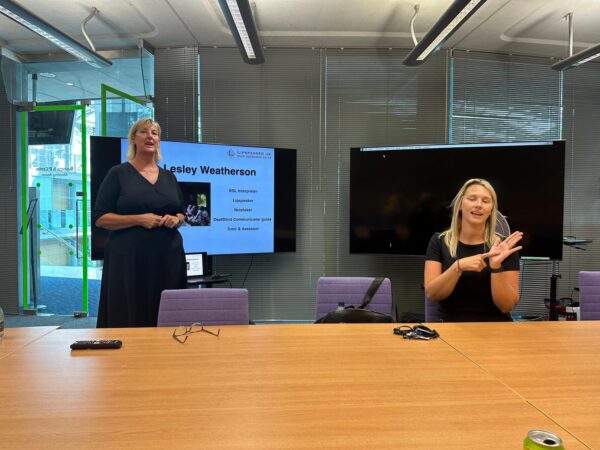
Why lipspeaking is a specialist skill
Lipreading is not a direct translation of speech, it is a highly skilled process.
Speech patterns can be distorted by a wide range of factors. For example, words like “pat”, “bat”, and “mat” (known as homophenes) can appear identical visually.
Context, timing, and expression are essential to understanding meaning.
A lipspeaker is trained to manage this complexity. They use precise lip patterns, controlled pacing, and natural expression to make speech as clear as possible. They also make real time decisions about how to present information so that it is easier to follow without changing the meaning.
Some professionals also offer signed lipspeaking, sometimes referred to as lipspeaking with sign.
This involves using sign alongside clear lip patterns to support understanding. It requires additional skill to coordinate accurate lip movements with appropriate sign, while maintaining clarity and pace.
This is why lipspeaking is a specialist form of communication support. It requires skill, training, and processing ability to deliver accurate and usable information in live situations
Communication is more than words
Captions play an important role in accessible communication. They provide a clear and reliable way to follow spoken content, especially in structured or large group settings but communication is not only about words.
Meaning is also carried through tone, pacing, facial expression, and subtle changes in emphasis. These cues help people understand how something is being said, not just what is being said.
A lipspeaker works alongside this.
Because they are physically present and visible, they reflect the natural rhythm and expression of speech in real time. This can make it easier to follow conversations, recognise nuance, and stay connected to what is happening in the moment.
For many people, this creates a more immediate and less tiring way to engage.
Choosing the right communication support
There is no single solution that works for everyone. Some people use lipspeaking. Others use captions or sign language. Many use a combination depending on the setting.
The right choice depends on the person, the environment, and the type of communication involved.

Frequently asked questions
A lipspeaker is a trained communication professional who silently repeats speech using clear lip patterns, natural expression, and controlled pacing.
They work with people who lipread by making spoken communication easier to follow in real time.
Signed lipspeaking, sometimes called lipspeaking with sign, involves using sign alongside clear lip patterns to support understanding.
It can be helpful for people who benefit from both visual speech and sign support.
A lipspeaker can be useful in any situation where spoken communication needs to be accessible for someone who lipreads.
This may include workplace meetings, interviews, training, university lectures, healthcare appointments, and events.
Yes.
Access to Work can fund communication support, including lipspeaking, for eligible employees in the UK.
Lipspeakers can also be available for students through Disabled Students’ Allowance.
Captions and lipspeaking provide different types of support.
Captions convert speech into written text on a screen.
A lipspeaker presents speech visually using clear lip patterns and natural expression.
Some people use one or the other. Some use both, depending on the situation.
Lipspeaking is a specialist skill.
It requires training, accuracy, and the ability to adapt to different speakers, environments, and types of communication in real time.