
Starting university is a huge milestone. It can be exciting, overwhelming, exhausting, and life changing all at the same time.
For deaf students, university often brings additional challenges that are not always obvious to hearing people. New environments, unfamiliar lecturers, fast moving group discussions, noisy social events, inaccessible teaching, and the pressure of constantly managing communication can make the transition feel much bigger.
At the same time, university can also bring independence, confidence, community, and opportunities to shape the way you learn and communicate.
Whether you are a BSL user, a lipreader, use hearing technology, rely on captions, or use a combination of communication methods, this guide explores some of the real experiences deaf students face at university and practical ways to prepare for them.
Before You Start University
One of the biggest mistakes many deaf students make is waiting until university starts before arranging support.
The earlier you begin preparing, the smoother your transition is likely to be.
Apply for Disabled Students’ Allowance (DSA) Early
Disabled Students’ Allowance can help fund communication support, assistive technology, notetaking, specialist equipment, and other reasonable adjustments.
The process can take time, especially during busy periods before term starts, so it is important to apply as early as possible.
Depending on your communication needs, DSA may fund support such as:
- Lipspeakers
- British Sign Language (BSL) Interpreters
- Speech to Text Reporters (STTR)
- Notetakers
- Assistive listening technology
- Specialist software
Many deaf students are unaware that communication support can continue throughout lectures, seminars, tutorials, placements, and even some university events.
Contact Disability Services Before Arrival
Most universities have a disability or inclusion team. Reaching out before starting gives you more time to discuss:
- lecture accessibility
- accommodation adjustments
- communication preferences
- emergency procedures
- captioning
- teaching materials
- support arrangements
It can also reduce stress during your first few weeks when everything already feels unfamiliar.
Think About Accommodation Needs
For some deaf students, halls of residence can be socially exciting but communication can also become exhausting very quickly.
You may want to consider:
- visual or vibrating fire alarms
- quieter accommodation
- lighting conditions for lipreading
- whether to tell flatmates about your deafness early on
- communication in shared kitchens and social spaces
There is no right or wrong approach. Some students are very open about their deafness immediately; others prefer to settle in first.
University Lectures and Seminars Can Feel Very Different
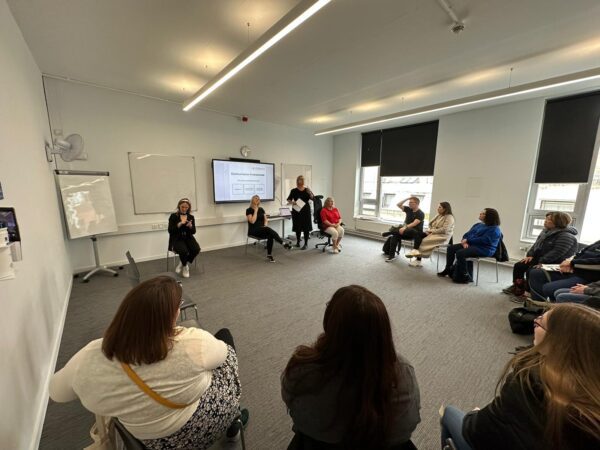
Many deaf students are surprised by how different university learning feels compared to school or college.
Lecturers may:
- walk around while speaking
- turn towards whiteboards
- dim the lights
- speak quickly
- use unfamiliar terminology
- play videos without captions
- forget to use microphones
Seminars and group discussions can sometimes feel even harder because multiple people may speak over each other or contribute from different areas of the room.
Even students who manage well in one to one conversations can suddenly find it challenging to keep up.
Practical Things That Can Help
Small adjustments can make a significant difference:
- requesting lecture slides in advance
- sitting where you can clearly see speakers
- asking lecturers to repeat audience questions
- using captions where available
- establishing communication ground rules during group work
- taking regular breaks from concentrated listening
Many deaf students also experience “deaf fatigue” or “listening fatigue”; the mental and physical exhaustion caused by prolonged concentration and communication effort.
The Social Side of University
Freshers’ week and university social life are often presented as exciting and effortless. For many deaf students, they can also feel isolating.
Noisy bars, crowded events, poor lighting, fast conversations, and unfamiliar accents can make socialising exhausting.
Some deaf students worry about:
- asking people to repeat themselves
- missing jokes or conversations
- appearing rude or withdrawn
- explaining their communication needs repeatedly
- feeling left behind in groups
These experiences are incredibly common.
It is important to remember that communication difficulties are not personal failings. University environments are not always designed with deaf accessibility in mind.
Many deaf students find that confidence grows over time as they meet people who communicate well, discover supportive communities, and become more comfortable advocating for themselves.
Communication Support at University
Different deaf students need different types of communication support. Accessibility is never one size fits all.
Some students benefit from:
- Lipspeakers
- BSL Interpreters
- Speech to Text Reporters
- Notetakers
- Captioning
- Hybrid support arrangements
The most effective support depends on your communication preferences, course structure, environment, and individual needs.
For example:
- a lipreader may benefit from a Lipspeaker during seminars or placements
- a BSL user may require interpreters throughout lectures and tutorials
- some students may use speech to text support for large lectures but prefer direct communication in smaller groups
Support is not about giving deaf students an advantage. It is about creating equal access to learning and participation.
When Support Is Not Working
Unfortunately, accessibility problems can still happen at university.
Examples may include:
- delayed DSA arrangements
- inaccessible teaching materials
- uncaptioned videos
- communication professionals not being booked correctly
- lecturers forgetting agreed adjustments
- technology failures
If problems arise, try not to wait until things become overwhelming.
Document issues early and contact:
- disability services
- student support teams
- course leaders
- DSA providers
- student unions if needed
Many problems can be improved once universities understand the impact they are having.
You Do Not Need to Have Everything Figured Out Immediately
Starting university as a deaf student can involve a huge amount of adjustment. You are not only learning a course; you are often learning how to navigate new environments, advocate for yourself, and manage communication access more independently than ever before.
That can take time.
Many deaf students spend their first few months discovering what works for them, what support they need, and how they communicate best in different situations.
With the right support, preparation, and understanding, university can become a place where deaf students thrive academically, socially, and professionally.
If you would like advice about communication support for university, Disabled Students’ Allowance, or accessible learning environments, our team can offer advice, support and guidance.
Frequently Asked Questions
Yes. Universities have a responsibility to make reasonable adjustments for deaf students and many students also receive support through Disabled Students’ Allowance (DSA). Support may include communication professionals, assistive technology, captioning, notetaking, or specialist equipment depending on individual needs.
Disabled Students’ Allowance is funding available to disabled students in higher education. It can help cover disability related study support, including communication support for deaf students such as Lipspeakers, BSL Interpreters, Speech to Text Reporters, notetakers, and assistive technology.
In most cases, yes. Contacting disability services early gives universities more time to arrange adjustments and support before term begins. Many deaf students find this reduces stress during the transition into university life.
Different students use different communication methods. Support may include Lipspeakers, BSL Interpreters, Speech to Text Reporters, captioning, notetakers, hearing technology, or a combination of support depending on the student’s communication preferences and learning environment.
If support arrangements are not working properly, try to raise concerns early with disability services, lecturers, student support teams, or DSA providers. Keeping a record of accessibility issues can also help universities understand the impact and resolve problems more effectively.